

Product Onboarding Challenges in AI Applications 🧑💻
Actionable tips to boost product onboarding and set your users up for success

👋 Hey, Matan here! Welcome to my weekly newsletter - A weekly dose of advice on building AI products, driving growth, and staying ahead of market trends.
🚀 Why Onboarding Matters
Product onboarding has two critical goals:
Understand your users – The more you learn about them, the better you can tailor their experience.
Equip them for success – Provide the right tools and knowledge so they can effectively use your product.
🤔 The Challenge with GenAI Onboarding
When it comes to GenAI applications, product onboarding presents a bigger challenge. Why?
Users are often unfamiliar with how to interact with GenAI interfaces. Unlike more traditional products, where users have experience with similar tools, GenAI apps are still new territory for many. This gap makes onboarding a crucial step for ensuring user success.
Product leaders working on GenAI apps face a unique issue: users need clear guidance to understand how to effectively engage with the system and craft useful inputs (also known as prompt engineering). Without this, they struggle to fully leverage the product’s capabilities.
Let’s take Galileo AI as an example—a tool that generates UI components from free text. You provide a text description of the component you want, but describing a UI component is not as straightforward as it seems. New users might be unsure of the level of detail, what language to use, or how long the description should be.
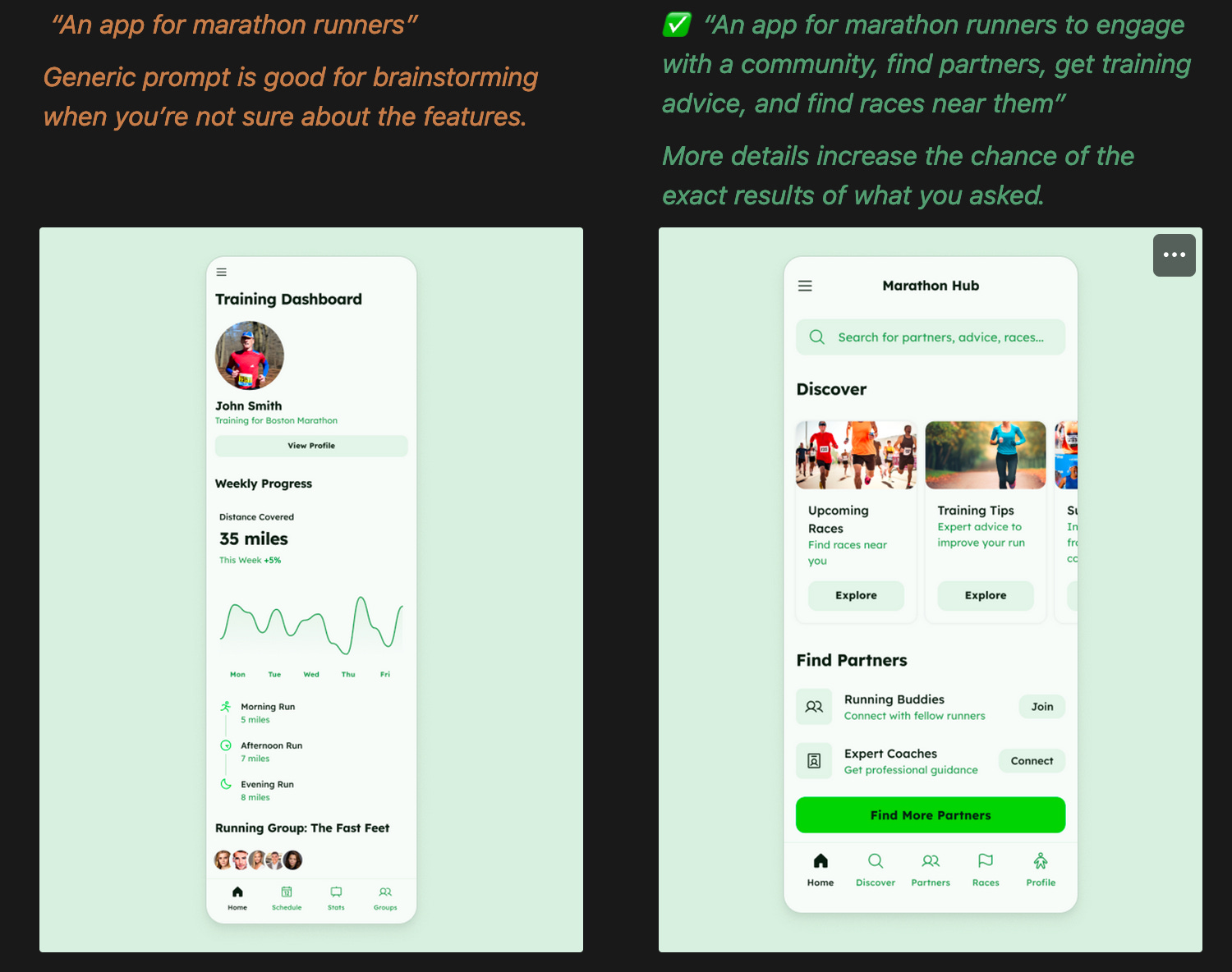
While examples can help, they might also fall short. Examples are often too concrete and users fail to generalize quickly what constitutes a "good" input prompt to get the most out of the tool.
Natural language interfaces, like those found in Galileo AI, present unique challenges that other products may not. Onboarding for these tools needs to go beyond traditional methods. It requires actively guiding users from the very start to ensure they are equipped to succeed.
🛠️ How to Take Action
A great product experience begins with a solid start. Your onboarding process should aim to set users on a path to success, right from day one.
Here’s a practical approach to improving your product onboarding:
Analyze churned users: Start by examining users who have left your product. What were their common challenges? How could these issues have been addressed earlier in their journey?
Learn from failure: Identify common pitfalls that led to user frustration or failure. Use these insights to create relevant examples and educational content for new users.
Create proactive content: Build onboarding materials that help users avoid common mistakes. Use examples, guides, and prompts that teach them how to interact with your GenAI features effectively.
Offer real-time feedback: Integrate a live feedback system that analyzes user prompts and offers suggestions for improvement on the spot. This helps users quickly understand what makes a "good" prompt.
Personalized onboarding flows: Tailor the onboarding experience based on user skill level or use case. For example, beginners might need more hand-holding, while advanced users might benefit from more nuanced advice.
In-app tooltips and help: Embed tooltips and help pop-ups directly into the interface, offering context-specific guidance based on the actions the user is currently performing.
Set up checkpoints: Break down onboarding into phases with checkpoints for users to revisit specific areas where they might be struggling. Allow them to retry or explore advanced features at their own pace.
Post-onboarding check-ins: After onboarding, send users a survey or prompt them in-app to check how comfortable they are with the product. Adjust guidance or provide more help if they’re struggling.
By doing this, you’ll ensure your onboarding process significantly enhances their overall experience and results in a better user journey.
— If you enjoyed this dose, please push the Like button below ♥️. Thank you! 🙏